Cashback Structures During Fixture Pileups: Tracing UK Platform Tactics for Overloaded Midweek Slates
Written by Tina Lorenz · Aug 25, 2026
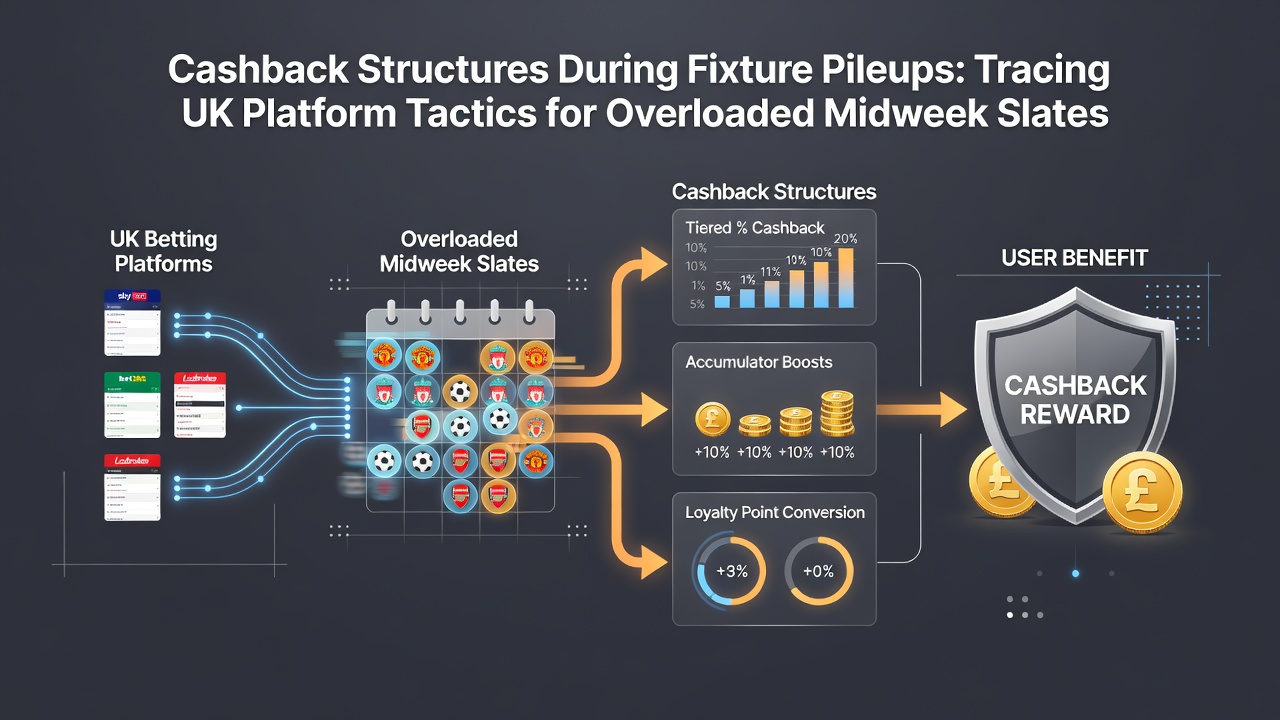
Cashback Structures During Fixture Pileups: Tracing UK Platform Tactics for Overloaded Midweek Slates
Data from European betting markets shows that cashback programs expand during fixture pileups, particularly when midweek schedules overload with Premier League, Championship, and cup competitions running simultaneously. Platforms adjust refund percentages and eligibility windows to match increased betting volumes that occur in these periods, and observers note specific patterns in how operators structure these returns.
August 2026 brings one such congested window, with early season league matches overlapping European qualifiers and domestic cup ties; operators respond by activating tiered cashback that returns between 5% and 15% of net losses on selected midweek accumulators. Eligibility often requires minimum stake thresholds and applies only to pre-match markets, while live betting on the same fixtures receives separate promotional treatment.
Platform Adjustments During High-Density Schedules
Operators segment cashback offers according to fixture density, and those who track historical patterns see higher refund caps introduced when more than four top-flight matches occur on a single midweek evening. The structure frequently caps total returns at a fixed amount per user, yet the percentage itself rises with volume, creating incentives that scale with the number of available games. Research from the Australian Gambling Research Centre indicates similar volume-based adjustments appear across multiple regulated markets when fixture calendars tighten.
One recurring tactic involves time-bound cashback windows that open at the start of the midweek period and close shortly after the final whistle of the last match, which channels activity into a concentrated timeframe and allows platforms to manage liability more precisely. Users who place bets across multiple time slots within that window receive aggregated loss calculations rather than per-match refunds, a method that simplifies processing while maintaining the promotional headline rate.
Eligibility Rules and Market Targeting
Eligibility criteria tighten during these slates, and platforms commonly restrict cashback to accumulator bets that span at least three selections from the overloaded schedule. Single-match wagers fall outside the refund structure, directing attention toward higher-margin multi-leg products. Data shows that cashback percentages sometimes increase for accas that include lower-profile leagues running alongside Premier League fixtures, thereby balancing risk across the full slate.
Payment timing follows a consistent pattern: refunds credit within 48 hours of the final match conclusion, and operators apply the returned funds as bonus credit rather than cash, which carries its own wagering requirements. Those who monitor terms observe that the play-through conditions attached to midweek cashback often mirror standard bonus rules, though some platforms waive minimum odds requirements for these specific promotions.
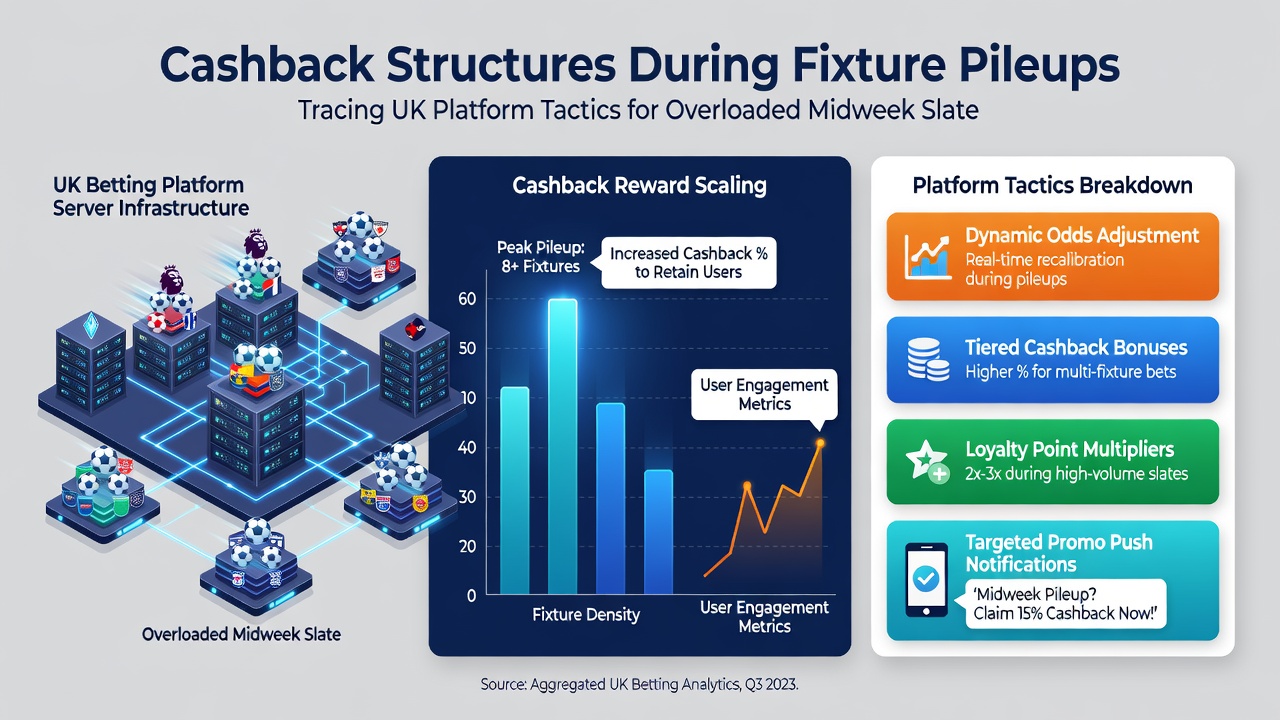
Comparative Approaches Across Operators
Different platforms apply distinct formulas, and industry reports from the European Gaming and Betting Association highlight variation in how cashback interacts with existing loyalty schemes. Some operators stack cashback on top of tiered rewards, while others treat the refund as a standalone mechanism that resets weekly. The choice depends on each platform's overall promotional calendar and the density of competing offers already active during the same month.
Fixture pileups also prompt temporary expansion of cashback to additional bet types, including both teams to score and over-under totals that proliferate in high-scoring midweek environments. The inclusion of these markets broadens appeal without altering the core loss-refund mechanic, and operators monitor take-up rates to refine future structures.
Conclusion
UK platforms maintain cashback as a responsive tool that scales with fixture congestion, and the tactics observed during overloaded midweek slates reflect coordinated adjustments to percentages, eligibility windows, and market selection. These structures operate alongside broader regulatory frameworks, and continued data collection from sources such as the Australian Gambling Research Centre and the European Gaming and Betting Association provides ongoing insight into how operators balance volume management with promotional delivery.